In addressing South Africa’s healthcare crisis, sector leaders are being tested not only on their technical capabilities and resources but also on the society they should model.
For too long, healthcare leaders have been locked into binary thinking: the National Health Insurance or one of several alternatives. Who should lead – the public sector or the private sector? Single fund or multi-fund? Prioritise people or budgets?
These are false choices. They are relics of arguments begun long ago in a country facing different challenges back then. Using that thinking will not lead to progress in the future, and it is progress we desperately need.
While we dither, in every forum we acknowledge the same truth – our healthcare system is broken. We think answering the binary questions posed will get us to where we must be. It will not. The government has met nearly every alternative to the NHI with silence. Even the one proposal that made it to a closed-door meeting with the President remains hidden from public view. Meanwhile, South Africans die from poor access, poor governance, corruption and affordability constraints. And this, in a country with some of the best healthcare professionals and facilities in the world.
The fact is, we are not aligned. We are not coordinated. Collective voices are not being heard. Consequently, South Africa is suffering.
We need to change our thinking. This is not about choosing the NHI or rejecting it. It is not about picking the most palatable alternative or dealing with isolated issues while ignoring others. It is about redesigning the system together.
Carl Jung said, “We cannot change anything until we accept it. Condemnation does not liberate, it oppresses.”
We have spent years condemning each other. Private condemns public. Public condemns private. Ideology condemns pragmatism. Pragmatism scorns ideology. And in the process, we mostly look at our issues through a single lens. We have lost sight of the people we serve.
Research shows that intergenerational teams solve complex problems better. Healthcare is nothing if not complex. Older members bring institutional memory. Younger ones challenge assumptions. Together, we build with courage and sustain with wisdom.
The rise of effectively governed artificial intelligence and the deployment of technological advances in how we provide healthcare and conceive of healthcare systems is an immense opportunity to contribute to addressing health inequity. We could not have envisioned how quickly we would get here 20 years ago. If we truly harnessed innovation and gave it to those whose futures are being shaped, would we still be debating the same tired solutions?
So let us ask a different question. Not “if not NHI, then what?” But “do we have the leadership we need to craft the solutions we demand for the world we are now in?” Put another way, is the debate about creating a system that embraces universal health coverage conducted by leadership that is diverse in thought and lived experience, collaborative, courageous, forward-focused, and compassionate?
We are all branches of the same ancient tree, drawing wisdom from roots we did not plant, offering shade to those yet to come. This next phase requires leadership that crosses artificial barriers, moves from turf wars to trust work, and shifts from power-hoarding to co-creating.
Progress demands leadership that reflects the world around us, acknowledges our shared intelligence and different strengths, and embraces emerging innovations and approaches that could better address inequities and constraints than the prescriptions already on the table.
The question is not what policy we pick. It is, do we continue to marginalise the people who most have a vested interest in the future, or do we demonstrate the power of South Africa, a diverse people, in co-creating a national solution for generations to come? It starts with us choosing to become. Together.
South Africa does not need more clever plans. It needs more courageous people defying divisions.
ENDS
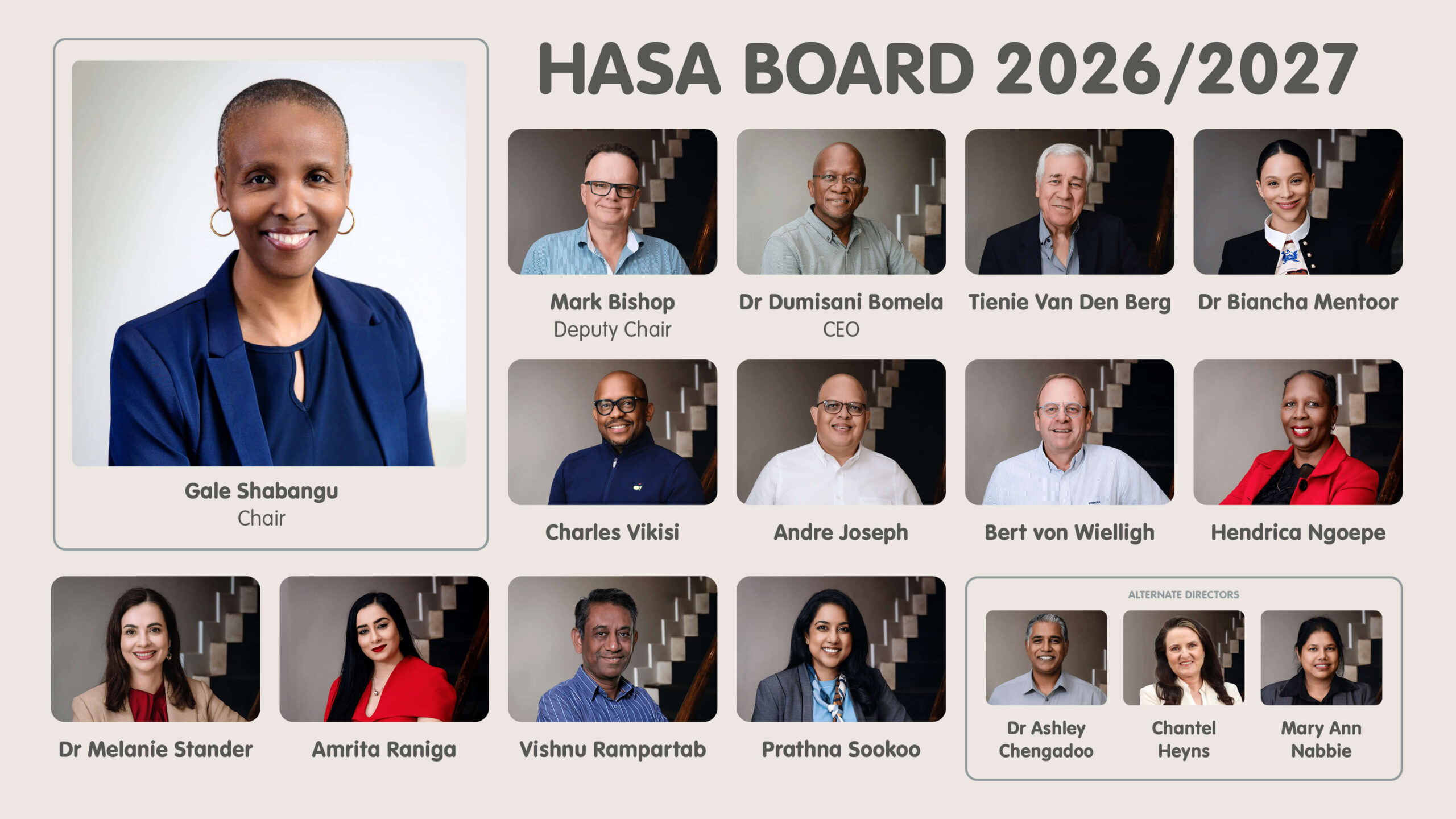
Dr. Biancha Mentoor is a Board Director at the Hospital Association of South Africa.
This op-ed is a summary of her address at the Hospital Association of SA annual conference on 7 October 2025.