Profile

Doing what needs to be done

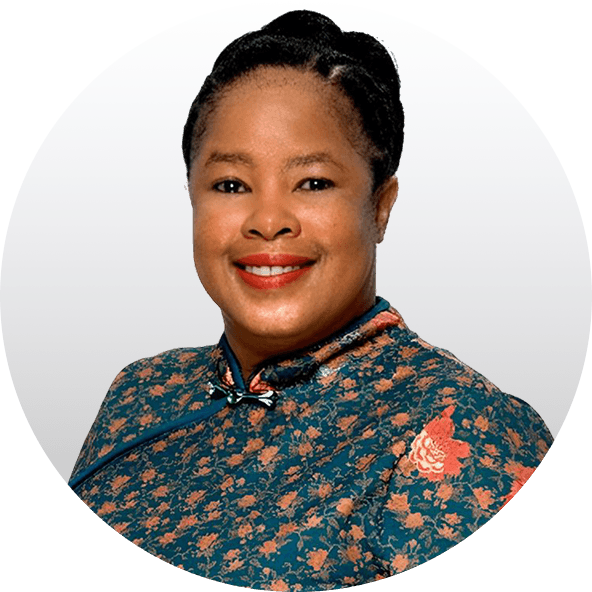
Bob Govender has spent nine years persuading South Africa’s public health system to accept free surgery from willing doctors. The harder sell, it turns out, is convincing the doctors to stop volunteering.

Bob Govender did not come to healthcare via the conventional route. He spent the early part of his career at De Beers – heading up the CSI portfolio at Venetia mine – and then at Shell, doing the same.

What followed him from job to job was not a sector, but a compulsion: to use whatever platform he had to make things a little more equitable for people who had drawn shorter straws.

At Mediclinic, where he has served as industry affairs executive for nine years, that compulsion found its fullest expression. The organisation’s pro bono surgical programme – which he manages – is built around a simple but powerful principle: private hospitals have theatre capacity that sits idle on weekends and in underutilised weekday slots. Public hospitals have patients who cannot access the surgery they need. In principle, that gap can be closed.

The mechanics, however, took time to get right. Govender will tell you, with characteristic candour, that Mediclinic’s earlier CSI efforts sometimes were not as effective as intended – he cites volunteerism days that left ECD centres with more work than before and donations that were too small to be meaningful as examples.

The surgical programme, he says, is different. Based on memorandums of understanding (MOUs) with provincial health departments, it is, he says, the closest thing he has seen to public-private collaboration functioning as it should: each party contributing what it does best, with the state retaining control of patient selection so there is no subjectivity, no queue-jumping, no favouritism.

“If we want to address the surgical backlog in our country,” he says, “then it has to be done in partnership with the state as part of a long-term and constructive relationship, not ad hoc.”

He is proud of the multi-disciplinary teams of specialists including device companies who donate prosthetics – genuinely, visibly proud. In private practice, surgeons, anaesthetists and physiotherapists work for themselves, happily volunteering their time and their professional risk for patients who may not have had opportunity to receive their services.

“I’m really proud working for an organisation that collaborates with doctors like this,” he says. The demand, in fact, exceeds supply: Govender has had to turn away surgeons who want to participate, but unfortunately whose provinces have not yet signed the necessary MOUs. “It’s hard to decline willing doctors desperate to assist but we have to do it the right way,” he says.

He is less sentimental about the structural realities. The Gauteng MOU lapsed and has not been renewed. The surgical backlog nationally runs to tens of thousands of cases. What Mediclinic does – targeting 250 cases a year, having completed over 1,500 since Govender joined – is, by his own reckoning, a small number in the bigger scheme of things. But he has never let that be a reason to do less.

The motivation, when pressed, comes back to something personal. He grew up spending some of his school holidays at a public hospital in Durban, keeping his grandmother company while she waited – not for treatment, but just to collect her medication. He knows what those queues feel like from the inside. “If you can make life easier for at least one person every day,” he says, “that’s a huge difference.”

More Practitioners